


Foothills-Inspired Xeriscape Installation in Northeast Albuquerque, NM
At SMART Landscape, we completed a full xeriscape installation in Northeast Albuquerque near Academy and Wyoming. The property was mostly bare, but the homeowners had a clear vision. They wanted a native New Mexico landscape that felt more like the foothills and gave their family a place to enjoy outdoors.
We brought that vision to life with shaped terrain, natural pathways, native plants, drip irrigation, gravel, crusher fine, and boulders.
Project Overview: Full Xeriscape Installation in Northeast Albuquerque
The project covered both the front and backyard, but most of the design work went into the backyard. Our goal was to turn the flat, open space into a layered xeriscape with natural movement, efficient irrigation, and materials that reflected the New Mexico setting.
We also selected xeric plants for New Mexico landscapes based on the homeowners’ preferences.
Before: Mostly Dirt With Only a Few Native Shrubs
Before we started, the front yard was mainly dirt with a few native shrubs the homeowners had planted. The backyard was completely dirt.
With little established landscape structure, we had an open space to shape around the homeowners’ vision. They wanted more than something nice to view from inside. They wanted a yard they could walk through and experience up close.
The Goal: A Backyard That Feels Like the Sandia Mountain Foothills
The homeowners are active outdoors and wanted the backyard to reflect what they love about New Mexico. Native plants and low-water-use plants were important to them.
To create that foothills-inspired feeling, I recommended adding elevation changes instead of leaving the yard flat. Natural pathways, varied planting heights, and a mix of rock and plant life would add depth and create a more immersive outdoor experience.
The Work We Completed: Building the Xeriscape From the Ground Up
Creating Natural Mounds and Pathways
We brought in additional fill dirt to create changes in elevation. Our team lightly compacted and shaped the soil into natural-looking mounds rather than leaving it in simple piles. We then formed pathways between the elevated areas.
Creating the terrain first gave us the structure for the rest of the xeriscape design. It also helped us decide where to place the trees, perennials, and groundcovers.
Planning How Much Water Each Plant Needs With Drip Irrigation
The property did not have an irrigation system, so we installed new valves, an automatic timer, irrigation lines, and low-flow drip irrigation.
Native and low-water-use plants still need the right amount of water to establish and bloom properly. Instead of giving every plant the same amount, we selected emitters based on individual watering needs. Trees need more water than smaller perennials and ground covers.
If you’re curious about how irrigation can be planned around different plant needs, explore our approach to irrigation installation and upgrades in Albuquerque.
Adding Landscape Fabric, Gravel, and Boulders
After installing the plants and irrigation lines, we placed porous landscape fabric around the planting areas. This weed fabric lets water move through it into the soil while blocking weeds.
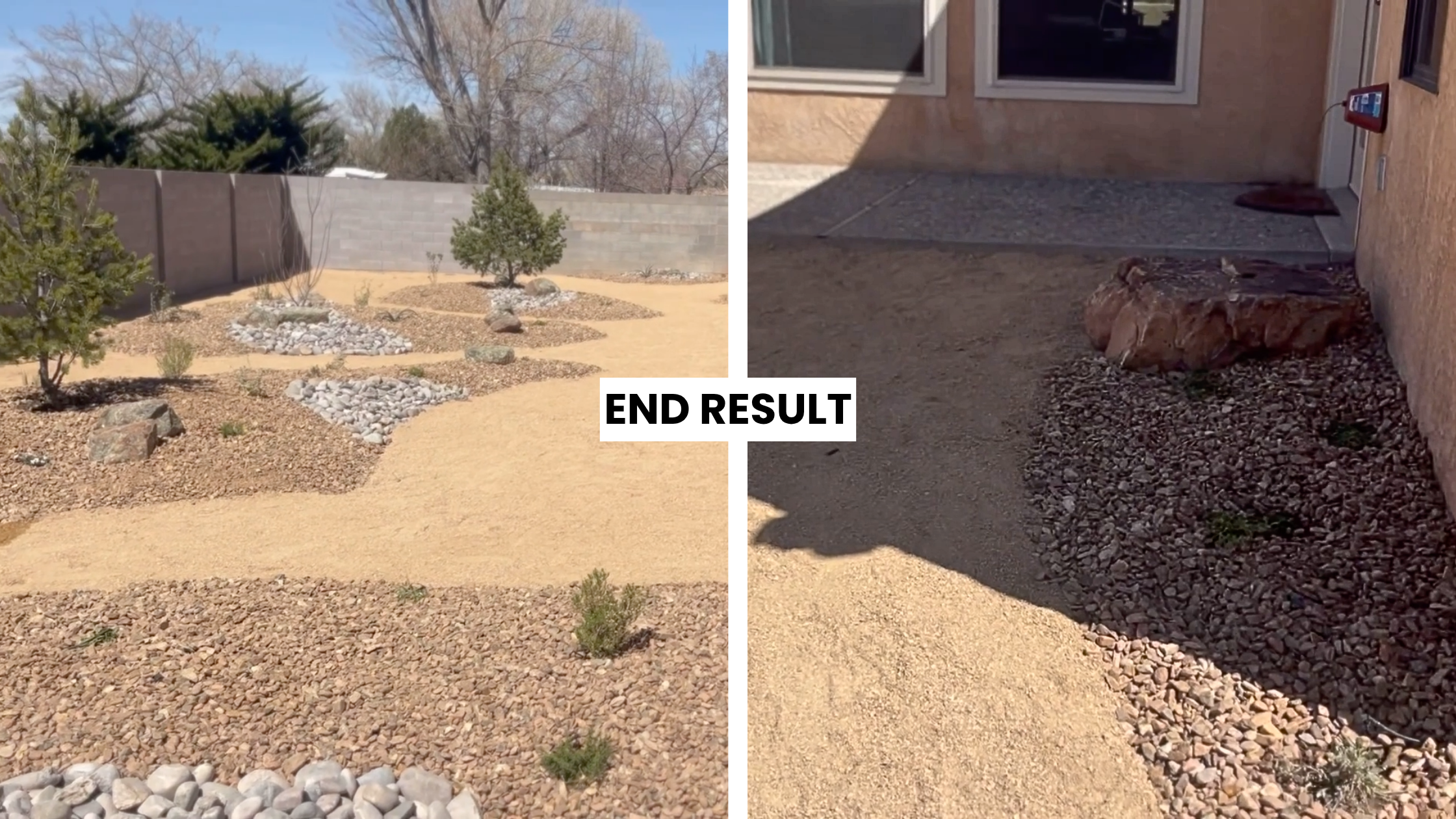
For the gravel landscaping portion of the project, we used Valley Gold crusher fine along the lower pathways. This material has a bright, decomposed granite look. We then placed 7/8 Santa Fe Brown gravel over the mounds and added large boulders.
The boulders were not an afterthought. We strategically placed them to balance the surrounding plants and other hardscape materials.
Materials and Planting Design
We used piñon trees and desert willows as accent trees. Native perennials created a lower planting layer, while ground covers along the mound edges added a wildflower-like effect.
This range of planting heights gave the yard depth. The taller trees, lower perennials, and ground covers worked together with the gravel and boulders to balance rock with plant life.
Explore how we create depth and balance through our professional planting services in Albuquerque.
The Drainage Challenge: Using Grading and Mounds to Move Water
Water had been collecting in one part of the property, so drainage was an important part of the plan. We considered the overall grading and the position of each mound to help redirect water to the right areas, where it could dissipate into the soil.
The terrain served two purposes. It created the foothills-inspired appearance while also supporting how water moved across the property.

Designing for the Future: The Right Plant in the Right Place at Maturity
My approach is simple: You have to have the right plant in the right place at maturity.
We consider more than how a plant looks on installation day. For trees, we also think about mature height, distance from roofs and gutters, afternoon shade, winter sunlight, and screening.
Whether a tree is deciduous or evergreen also affects placement. A deciduous tree may work where the homeowners want more winter sunlight. An evergreen may make more sense where year-round shade or screening is the goal. Planning ahead helps the landscape continue serving its purpose as the plants grow.
The Final Result: A Native New Mexico Landscape That Improves With Time
I believe a good landscape should become more enjoyable as it matures. As the plants grow, they bring greater balance to the rock and gravel and added interest across the seasons.
The homeowners can now walk along the pathways, notice new flowers blooming, and watch the plants develop. This landscape is meant to be enjoyed from within, not only viewed through a window.
What Homeowners Can Learn From This Xeriscape Installation
Xeriscaping does not have to mean covering a flat yard with gravel. Changes in elevation can add movement, while native plants, pathways, and boulders can make the space feel more natural.
This project also shows why drip irrigation, drainage, and mature plant size should be planned from the beginning. Our role was to turn the homeowners’ vision into a practical, sustainable landscape that worked for their property.
That reflects our SMART philosophy: Sustainable, Manageable, Aesthetically pleasing, Resourceful, and Targeted.

Before & After Gallery: Xeriscape Installation in Northeast Albuquerque
The project photos show how the property changed from mostly dirt to a layered native xeriscape. They document the mounds, pathways, drip irrigation, plant placement, gravel, crusher fine, and boulders coming together throughout the installation.
Suggested captions:
- Before: Mostly dirt backyard before the xeriscape installation.
- During: Natural mounds and pathways taking shape during site preparation.
- After: Foothills-inspired xeriscape with native plants, gravel, crusher fine pathways, and boulders.
- After: Layered planting design with accent trees, native perennials, and ground covers.
Plan a Xeriscape Installation in Albuquerque, New Mexico
At SMART Landscape, we begin by understanding what homeowners want to see and experience in their yard. We then use practical design, suitable plants, and carefully selected materials to bring that vision to life.
If you are ready to transform a mostly bare yard into a landscape inspired by New Mexico, get a detailed estimate for xeriscape installation or call (505) 250-1187 to discuss your project.