

Monsoon Yard Drainage Checklist New Mexico: Signs of Runoff and Erosion Problems
New Mexico’s monsoon season can bring heavy rain, heavy downpours, and thunderstorms that produce large amounts of rainwater in a short time. While the North American Monsoon System brings needed moisture to the Southwest, it can also increase the risk of flash flooding, yard drainage problems, soil erosion, and water damage.
In Albuquerque, monsoon season typically brings about 3.5 to 4.5 inches of rainfall, often falling during intense, short-lived storms. Even properties that receive little rain can be affected by runoff flowing from higher ground.
This monsoon yard drainage checklist for New Mexico homeowners is designed to help identify and document warning signs before deciding whether professional evaluation is needed.
Before the Rain: Map Where Water Is Likely to Travel
Before forecasted storms arrive, walk your property and observe how the ground naturally slopes. Although New Mexico’s monsoon season generally runs from June through September, the most active period is usually mid-July through August. A quick inspection before this peak period can help you spot drainage concerns before heavier storms arrive.
Start at the highest point and determine the downhill direction. Look for slopes that carry water toward your house, garage, patio, walkways, doors, or neighboring properties. Also identify low spots where surface water may collect after heavy rain.
Note any retaining walls, edging, raised beds, or hardscape that may block or redirect runoff. Check whether water from the roof, patios, driveways, or neighboring lots enters your yard, and look for displaced gravel, debris, or uneven soil that may already show the flow path.
Take a photo of suspected runoff routes before the next storm, then compare the same areas afterward to spot changes.
FEMA recommends making sure your yard slopes away from buildings and gives stormwater a clear place to drain. A simple test is to ask, Does the visible grade carry water away from the house or back toward it? Learn more about protecting your home from yard flooding.
Checklist Item 1: Look for Water Moving Toward the House
One of the clearest signs of a yard drainage problem is water flowing toward your house instead of away from it. During monsoon season, heavy rain and wind-driven rain can quickly send runoff toward the foundation, especially where positive drainage is lacking.
Use this checklist after a storm:
- Soil slopes downward toward the foundation.
- Water stains or deposited dirt appear against exterior walls.
- Mulch, gravel, leaves, or seed pods collect near the house.
- Puddles form beside doors, stucco, slabs, or foundation edges.
- Downspouts discharge directly beside the structure.
- Patio or walkway runoff flows back toward the home.
Trace the flow uphill to identify the source, whether it is the roof, a hard surface, a neighboring property’s grade, or a poorly directed slope.
If runoff repeatedly collects against the foundation or enters a garage, doorway, crawlspace, or another enclosed area, schedule a professional evaluation rather than assuming the cause.
Checklist Item 2: Find Repeated Ponding and Standing Water
Not every puddle signals a serious problem. During monsoon storms, heavy rain can create temporary surface water, especially where compacted soil cannot absorb more water fast enough. However, repeated ponding in the same location deserves closer attention.
Look for these signs:
- Puddles remain long after nearby areas have dried.
- Water repeatedly collects in the same low spots.
- Gravel becomes muddy, dark, or sunken.
- Plants or turf decline in isolated wet areas.
- Water sits against patios, walkways, or walls.
- Low areas have no visible outlet.
Repeated ponding may point to poor drainage, uneven grading, compacted soil, or runoff with nowhere to go. Document the problem before assuming a solution such as French drains, catch basins, or other drainage systems.
Record the water depth, affected area, how long it remains, and nearby structures. The National Weather Service explains that monsoon rain can create ponding when rainfall exceeds the soil’s ability to absorb water.
Checklist Item 3: Check for Rills, Channels, and Washed-Out Soil
Small grooves in the soil may seem minor, but they often show where runoff is repeatedly flowing. Over time, heavy rain and monsoon storms can remove soil, deepen channels, and worsen erosion.
Inspect your yard for these signs:
- Narrow grooves or small channels form in bare soil.
- Soil collects at the bottom of a slope.
- Plant roots become exposed.
- Gravel washes downhill or spreads across walkways.
- Mulch or decorative rock repeatedly washes out of planting beds.
- Shallow channels become wider or deeper after each storm.
These rills show where runoff is concentrating instead of soaking into the ground. Follow the channel uphill to identify the source rather than simply filling it with more soil.
The USDA Natural Resources Conservation Service (NRCS) identifies small rills and surface channels as visible signs of water erosion. Photograph the area after each storm to track changes.
Minor erosion does not always require a retaining wall, but worsening soil movement near your house, patio, or other structures should be professionally evaluated.
Checklist Item 4: Inspect Gravel, Mulch, and Planting Beds for Movement
Loose landscape materials often reveal runoff patterns better than bare ground. If gravel, mulch, or soil shifts after every monsoon rain, water is likely flowing through the area with enough force to move it downhill.
Look for these warning signs:
- Gravel has migrated downhill.
- Landscape fabric is exposed.
- Mulch has collected against walls or walkways.
- Bed edges are undercut.
- Soil has washed away from plant crowns.
- Plants lean after storms.
- Sediment has collected on patios or walkways.
Follow displaced gravel, mulch, or sediment uphill to find where the runoff begins. Repeated washouts often indicate the planting bed sits in an active flow path or lacks adequate grade control.
Keeping the soil covered with mulch, gravel, or plants can help reduce erosion, but surface cover alone will not stop concentrated runoff. If the same area washes out after every storm, the underlying yard drainage pattern should be evaluated instead of simply replacing the lost material.
Checklist Item 5: Examine Slopes and Existing Retaining Walls
Slopes and retaining walls should be inspected together because water affects both. During monsoon season, heavy rain can saturate the soil, increase runoff, and place extra pressure on slopes and retaining walls.
Check for these warning signs:
- Soil is bulging near the bottom of a slope.
- The slope has fresh cracks, slumping, or bare patches.
- An existing retaining wall leans, bows, separates, or loses material.
- Water exits through unexpected joints or along the wall.
- Soil washes over the top of the wall.
- Puddles form behind or below the wall.
- A previously level area has started settling.
These signs deserve prompt evaluation, especially if soil movement or runoff continues to worsen.
Our guide on the signs your yard may need a retaining wall highlights common warning signs, including erosion, pooling water, uneven ground, and slope concerns.
A retaining wall is not the solution for every drainage problem. However, if a wall is leaning, separating, rapidly deteriorating, or a slope is becoming unstable, a professional assessment can help determine whether retaining-wall or other hardscape improvements are appropriate.
Checklist Item 6: Review Roof, Downspout, Patio, and Walkway Runoff
Not all runoff begins in the yard. Your roof, driveway, patio, and walkways can collect rainwater and direct it into one area, creating more surface water than the ground can absorb during monsoon storms.
Inspect these areas for signs of trouble:
- Downspouts discharge beside the foundation.
- Roof water cuts channels through gravel or soil.
- Patios drain into planting beds with no visible outlet.
- Walkways direct runoff toward the house.
- Driveway runoff enters the side yard.
- Water collects where two hard surfaces meet.
- Splash blocks or downspout extensions have shifted or become disconnected.
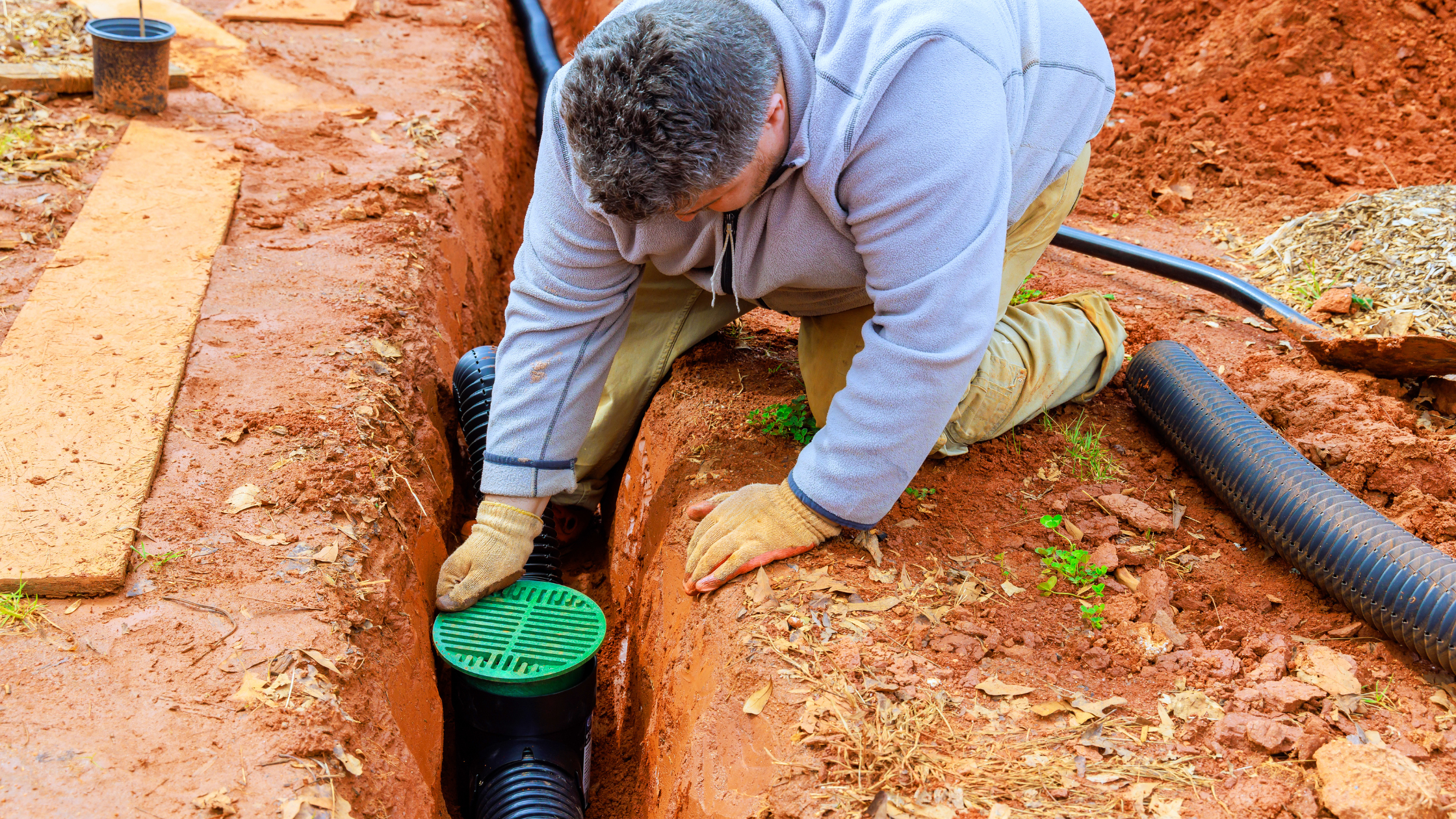
Before monsoon season begins, clean gutters and downspouts to remove leaves, seed pods, and other debris that can cause blockages. Once they’re clear, inspect these areas for signs of trouble.
Clear gutters of leaves, seed pods, and other debris, then inspect where downspouts discharge. Look for erosion, displaced gravel, ponding, or runoff returning toward the foundation instead of flowing safely away.
Checklist Item 7: Observe the Yard During Rain, Only When It Is Safe
Some yard drainage problems only appear during monsoon storms. Watching how water moves can help you identify where runoff enters your property, where it speeds up, and where it collects. Always observe from inside your home or another protected location.
Use this checklist during or after a storm:
- Watch where water enters the property.
- Note where separate runoff paths join.
- Identify areas where water speeds up.
- Mark places where water changes direction.
- Photograph ponding after the storm.
- Record how long-standing water remains.
Never walk through moving water or inspect arroyos, washes, or flooded areas. Flash flooding can develop quickly in New Mexico, so monitor a NOAA Weather Radio or another trusted weather source during severe weather.
Keep a drainage log with the date, approximate storm duration, ponding locations, signs of erosion, and photos. This record can help identify recurring patterns and make a future contractor consultation more productive.
How to Decide Whether the Problem May Involve Grading, Drainage, or Hardscape
After completing this monsoon yard drainage checklist New Mexico, look for recurring patterns rather than isolated issues. The visible symptom does not always identify the correct solution, and some properties have more than one drainage concern.
As a general guide:
- Possible grading concern:Water consistently flows toward the house or settles in a broad low area.
- Possible drainage concern:Water has no outlet, repeatedly ponds, or concentrates from roofs or hard surfaces.
- Possible erosion-control concern:Rills, exposed roots, displaced gravel, sediment deposits, or soil movement return after each storm.
- Possible retaining-wall or hardscape concern:Slopes become unstable, elevation changes limit yard use, or an existing retaining wall is leaning or separating.
SMART Landscape can evaluate whether retaining-wall or hardscape improvements may be appropriate based on your property’s layout, runoff, slopes, and landscape function. If needed, we can also recommend when additional drainage or grading expertise should be considered.
Drainage Red Flags That Should Not Be Ignored
Some drainage issues go beyond routine landscape maintenance and should be professionally evaluated.
Watch for these red flags:
- Water enters your home, garage, or another enclosed area.
- Runoff repeatedly collects against the foundation.
- A retaining wall is leaning, separating, or deteriorating.
- Soil movement threatens patios, walkways, or nearby property.
- Gullies or erosion channels deepen after each storm.
- Water reaches electrical equipment or exterior outlets.
- A slope changes noticeably after a major storm.
- Flash flooding reaches your property
Avoid digging trenches or redirecting runoff without understanding where the water will go. If flooding is active, stay away from moving water and follow National Weather Service and local emergency instructions.
Get a Detailed Estimate for Retaining-Wall or Hardscape Concerns
Inspect your yard before and after monsoon season for runoff, repeated ponding, erosion, displaced gravel, unstable slopes, retaining-wall concerns, and runoff from your roof or other hard surfaces.
The visible symptom is not always the root cause. A professional site walkthrough can help determine whether retaining-wall or hardscape improvements may be appropriate and whether additional drainage or grading expertise should be considered.
SMART Landscape provides retaining-wall installation and hardscape installations designed with your property’s slopes, runoff, erosion concerns, and long-term landscape function in mind.
Get a detailed estimate to discuss your retaining-wall or hardscape concerns and learn about the best options for your New Mexico property. Call or text us at (505) 250-1187 today.
Frequently Asked Questions
How can I tell if my yard has a drainage problem before monsoon season in New Mexico?
Complete this monsoon yard drainage checklist before the monsoon months begin. Watch for runoff flowing toward your house, recurring low spots, standing surface water, erosion channels, displaced gravel, exposed roots, and downspouts that direct rainwater into problem areas.
Is standing water after monsoon rain always a yard drainage problem?
Not always. Temporary ponding can happen during heavy rain, especially when compacted soil cannot absorb more water, but repeated standing water or surface water near your home may indicate poor yard drainage or proper drainage issues.
What are the first signs of soil erosion?
Early signs of erosion include shallow rills, small channels in the soil, exposed roots, displaced gravel or mulch, and sediment collecting at the bottom of slopes. The USDA Natural Resources Conservation Service (NRCS) identifies small rills and surface channels as common signs of water erosion.
Can a retaining wall fix a yard drainage problem?
Sometimes. A retaining wall can help stabilize soil, manage elevation changes, and reduce erosion, but it is not the right solution for every drainage issue. Some properties may require other drainage systems, such as French drains or catch basins, depending on the source of the runoff.
When should New Mexico homeowners call a professional about monsoon runoff?
Call a professional if runoff repeatedly flows toward your house, standing water has no outlet, erosion worsens after each storm, or a retaining wall begins leaning or separating. Addressing these problems early can help prevent damage to your property and landscape before the next monsoon season.
How do I contact SMART Landscape about yard drainage concerns?
If you’ve noticed runoff, standing water, erosion, or other drainage issues, contact SMART Landscape to schedule a consultation. Call (505) 250-1187 or use the contact form on the website to get started.